Swamiji talks about ritual worship as a stepping stone, and cautions against inadvertently manifesting evil.
Swamiji is talking about misguided possessiveness.
We start off on the wrong side. We call it ‘mine’ first, and only later we say, ‘God, it is yours.’ It shouldn’t be like that. He gives an example of ritual worship, saying: I don’t know how many of us really understand ritual worship – some of us criticise ritual worship – but he who criticises it, is a fool, because Ramakrishna always said, ‘Plus, never minus!’ [Never subtract or detract].
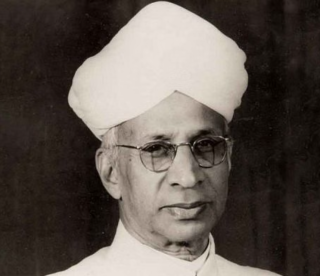
Someone asked [philosopher and statesman, Sarvepalli Radhakrishnan] Radhakrishnan, ‘You Hindus boast such high philosophy, but then why all these statues, murtis and other kinds of worship? What for?’ You know what Radhakrishnan answered? ‘How long ago did you build baby classes?’ The person answered: A long time ago. Radhakrishnan responded: ‘Then tell me, why do you still have baby classes in all schools? You should have only universities.’
Says Swamiji: There are always going to be souls at that level, whether you like it or not. It's for them, that these gross [external] things are made. But those people can take in the subtle things – in the mind – and then from there, it can go higher to the abstract – God himself. So, we criticise ritual worship, but I personally don’t criticise it. I want you to think about ritual worship – it’s such a beautiful thing.
In India, there were kings [Maharajas] and these kings had to be good people. They had to be fair people, they had to be honest people. How to keep their honesty? They could only keep their honesty by knowing and practicing, in their hearts, knowing that everything belongs to God, and practising to be servants of God.
And servants of God always live on the grace of God. So the king used to ask in the morning, ‘Have you given asana [a seat] on the altar, to the devi [goddess] or deva [god] in the temple? If they answered yes, he’d say, ‘Right, then you may place my asana. Did you bathe the deity in the temple?’ Yes. ‘OK, then I can have my bath.’ They will get him all the 16 different items of worship. Each time, he’d ask, ‘You offered and gave to the devi?’ So he accepted it as a grace and prasad. In the end he’d ask, ‘Have you raised the flag [at the temple]?’ Yes. ‘Then raise the flag here.’
So from morning until evening, the practise was, ‘It is for God that I have to rule this country, as his divine instrument. That is the basis of ritual worship, with the sixteen different items. Swamiji names them. These are the sixteen things. [See HERE]: So, you’re always practising from the beginning, ‘It belongs to God. I’m only taking it as prasad [sacramental food or items].’
At home when you do that, it is the same. All these different things belong. They are the powers and strength of God. So you give to God, but later on you say, 'God, everything belongs to you. I will use it as your prasad.' You live as a detached being. A detached being will always get God. He who is detached from material things.
It doesn’t mean he neglects anything. But he looks after those things as if they belong to God. And thus, we find he will evolve. And when evolution comes from there, he may mentally [so no longer externally] offer all these things to God, at one stroke – God, everything belongs to you. He doesn’t have to go and take item by item. And thus, he is made selfless and pure.
But what we do, is we get stuck in these material things, and such a beautiful world, we criticise it. We say it’s maya, it’s dirty, it’s no good, not knowing how to use it. Swamiji tells an amusing story about a woman who went to a séance medium [one who supposedly communicates with the dead] to get in touch with her departed husband. You must please hear Swamiji telling this amusing story, because it puts into context, these subsequent remarks.
Swamiji says: Attachment creates hell [on earth]. And stay away from using terms like ‘hell’. If we’re doing sadhana [spiritual practise] we must be careful not to think the wrong thing, or it will manifest.
He tells the story of the Rishi Narada going to ask Lord Vishnu where Swarga [heaven] is. Lord Vishnu drew a map, and he pointed and said, ‘Swarga is here.’ Narada went and stood on that spot, saying ‘Thank you, Lord.’ Lord Vishnu asked, ‘What for?’ Narada said, ‘If you said Swarga is here, it must be here.’ And he got the bliss of heaven in the same moment.
Swamiji says, when you do sadhana, whatever you say may not materialise then, but it will materialise after a couple of years, and you’ll be living in hell.
And in hell, there’s no bell [to call anyone]. Here at least, if you’re sick in the hospital, you ring the bell and nurses come running. There you scream and cry – but nothing. And even if they do come, they cannot share your pain.
Swamiji concludes by saying: Some people live in such a way, that they create a situation here, worse than hell. You may not believe it, but they do it. Unwittingly, maybe, ignorantly maybe, but there’s no reason why you should be doing that – because you’re an intelligent being.
To learn from these wise words, please click on the link below. Jai Sri Ramakrishna!
Duration: 09:19
Click here for the Flipbook version of: → Swamiji's biography
It's a free-to-read, draft 396 page, extended version of 'A Life Lived For Others.
However, if you'd prefer a straight-up PDF version, please click HERE. (Depending on the age of your device or the browser you use, you may need to download a a PDF reader.)
Dear Devotee, if we use the term 'He or he', when referring to Swamiji, it's not impolite or disrespectful. It's to minimise the repetitiveness of saying or writing 'Swamiji' too many times.
The original audio recordings of these posts were made by close Ramakrishna Centre of South Africa and Swami Shivapadananda devotee, Mother Radha. The audio editing and noise reduction of the original 1970s-onwards tapes, has been lovingly engineered, over many years, by her son and our dear gurubhai, Brother Tim. May Sri Ramakrishna and Swamiji bless them both.
Admin tip: Underlined words are links. If you click on them, they'll take you to an explanation of the particular word or term. [In these overviews, Admin comments are typically in a smaller green font, and square bracketed, like this statement.]
Dear reader, if you spot typos or other errors, please feel free to email the site admin on info@imbizo.com with your suggested correction/s.
Context: As always, care should be taken to remember that what Swamiji was saying, was often very specific to the needs of people with him at the time. Please bear this in mind.
Links to our Guru Parampara (spiritual lineage) organisations, which will broaden your knowledge base: Ramakrishna Math and Mission and our alma maters, the Ramakrishna Centre of South Africa and the Sri Sarada Devi Ashram in Durban. The Ramakrishna Centre of Johannesburg is also active in Gauteng province in South Africa.
There are various publications [The Gospel of Sri Ramakrishna etc.] which you can download at no charge, from the Ramakrishna Centre of SA website page, HERE.