Daily Reading 114. Swamiji speaks on Master signalling His exit and uses Girish Chandra Ghosh to illustrate avatar transformation power.
Taken from Mother Radha’s notes, written at Swamiji’s feet.
We can all concentrate – but on many things. We must learn to concentrate on one thing.
Do not look at someone and form an opinion of them. Do not expect to say something and [assume] they will believe you, they will not.
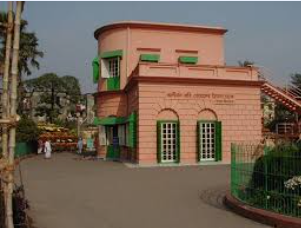
At one time Sri Ramakrishna said to Holy Mother Sri Sarada Devi, ‘These are the signs that I will soon be departing. They are: when I go to live in Calcutta [Kolkata]; when people begin to worship me as the Deity; when more and more people come to me.’ When Master was ill he went to live at [the garden house] in Cossipore in Calcutta. People went to Dakshineshwar to see him but he was not there. They asked Holy Mother Sri Sarada Devi, ‘Where is Sri Ramakrishna?’ She told them, ‘Gone away.’ So they worshipped Sri Ramakrishna’s picture and offered Prasad [consecrated or sacramental food]. When Master heard about this he said, ‘Oh why didn’t they offer it to Her [Mother]? He said that because he and Holy Mother are one. The traditional rule is that you must not worship the picture of a living saint. You can offer flowers but not fruits.
If you leave these three: Brahmacharya [celibacy at lowest meaning, constant remembrance of God at its highest], meditation, and reading the scriptures, it is not sannyas [monasticism or renunciation].
All sadhana [spiritual practice] is a flower offered to God but satsang [group prayer service] is the ever-ready fruit. I know only one person who practises the precepts of Gurudev [Swamiji’s Guru, Swami Nischalananda Puri] – Prishani [daughter of our dear Gurubhai, Dr. Anup Seebaran]. One day her uncle came bringing gifts for the family. He offered her money. She said, ‘No.’ Later they asked her why and she replied, ‘Because Gurudev said you must not accept gifts.’ We must give, give, give but not accept gifts ourselves. [Reason: Aparigraha. Most gifts are given with some sort of intention or motivation, albeit it unintentional. Therefore they bring ‘obligation’. This creates a subtle form of bondage or entrapment.]
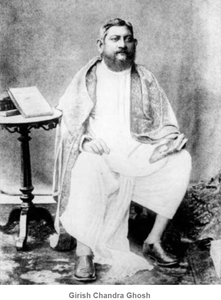
From a Christmas period talk: Sri Ramakrishna, the Incarnation [Avatar], said, ‘The ordinary guru gives you information – but a guru like Jesus Christ transforms your life.’ The transformation takes place within and you will manifest the highest quality. Sri Ramakrishna would just touch somebody and say, ‘Ma, Ma [his name for the Divine Mother], wake up!’ and they would be transformed. They would have a vision of God. Girish [Chandra Ghosh, ‘father’ of Bengali theatre and a householder devotee of Sri Ramakrishna’s], loved ‘woman and gold‘, but his whole life was transformed just by Sri Ramakrishna saying, ‘Wake up, Ma!’
Bandi, Shitala, Kali [Hindu goddesses] and others are still there in the astral [plane].
Question from devotee: In the astral body?
Swamiji: Yes. Where is your mind? [i.e. where do you think it’s located?]
Devotee: I do not know.
Swamiji: [touches his body in different places and says] Here, here, here. So they are in the astral – what is called Hiranyagarbha, cosmic mind.
If you worship Sri Ramakrishna now, you have worshipped him and Rama and Krishna before, in different incarnations. It is the same Incarnation that is in Sri Ramakrishna now.
The secret of sadhana [spiritual practise] is the sincerity and purity and love with which you do it. You must do sadhana and also read the words of Master [Sri Ramakrishna, contained largely in ‘The Gospel of Sri Ramakrishna]. Chew his words over. There is no fruit without a tree – for example it is no good reading Swami Vivekananda and others, without reading their source. If you chew it over, this is your real sadhana. This will revolutionise you.
[Footnote: Girish Chandra Ghosh was born of pious parents on February 28, 1844, Girish grew up as a lively, carefree soul. He inherited from his father a sharp intellect and a pragmatic approach to life, and from his mother a love for literature and devotion to God. His grandmother introduced him to the rich heritage of India’s epics and mythology.
At the threshold of youth, Girish started drifting into drunkenness and debauchery. Yet side by side with his perverse behaviour, he would raise money to help the poor.
Because of his wayward nature, he could not complete his school education. But he was a genius and a voracious reader. He studied several subjects and gained vast knowledge in English literature, Western philosophy and science. His prodigious creativity found expression through writing and acting. He wrote many well-known plays, and acted in most of them. The songs which he wrote are popular even today.
On seeing Sri Ramakrishna for the first time, he seemed unimpressed. Only in his fourth meeting did he feel the wonderful attraction of Sri Ramakrishna. Through Master’s influence, he slowly gave up his haughtiness, rudeness and arrogance. The Master asked him to have faith in order to get rid of crookedness of heart. Under the Master’s loving care, Girish started realising that Master would not condemn him for his shortcomings. One great virtue that Girish had was his steadfastness to Truth and total lack of hypocrisy. Finally, one day Girish surrendered completely to the Master. Girish’s faith and love were so intense that his life was quickly transformed. [For the back story of Girish giving Sri Ramakrishna his ‘Power of Attorney’, please click HERE.]
On 1st January 1886, during the Master’s final illness, Girish openly started preaching the Master’s divinity. After the Master’s death, Girish purposely did not view Master’s body, to preserve in his mind the conviction that Master was immortal.
Girish breathed his last on 8 February 1912. His last words were: ‘Master, you have come. Please destroy my worldly intoxication. Victory to Sri Ramakrishna! Let us go!‘]
Underlined words are hypertext links to clarification, explanation or other sources. Just tap on them.
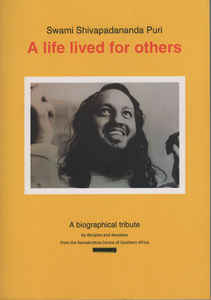
The free-to-read or download, 396-page Flipbook version of Swamiji’s biography, ‘A Life Lived For Others‘, is available by clicking HERE. If you’d prefer the PDF version, please click HERE.
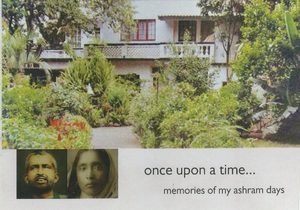
For our gurubhai Atmaprakash Kramer’s beautiful pictorial ‘memoir’ booklet of the Ramakrishna Centre of South Africa, Avoca Ashram, please click HERE.
There’s also a Facebook site for Swamiji’s posts now. They feature newer readings published more recently. Click HERE to view.
These recordings or the excerpts from them, were made from the early 1970s onward, by Mother Radha, a close devotee of Swamiji’s and edited for uploading here by our gurubhai and her son, Brother Tim. Please be mindful that what Swamiji was saying may have been specific to those with him at the time.