Daily Reading 63. Swamiji says ‘wishing’ for something creates rebirth. He also speaks on our Holy Trio and the essential Ishta Devata.

Taken from Mother Radha’s notes, written at Swamiji’s feet.
We often hear the words, ‘I wish . . . ‘ Underline this in your minds: This brings you back to rebirth again and again. When you realise you are the Atman you are free from all the worlds – because you are omnipresent [everywhere]. The Lord is in all the lokas [realms of consciousness] and all lokas are in
Him. For example: You are in the dream and the dream is in you. That is Vedanta.
Sri Ramakrishna is a perfect avatar [incarnation]. He is the Father and Swami Vivekananda
[his lead disciple] is the Son. Holy Mother Sri Sarada Devi is the Holy Spirit, Vidyamaya. She is not Avidyamaya, which gives fear. Vidyamaya strengthens you, joins you to the Lord Himself.
Sri Ramakrishna said that Swami Vivekananda is Him, and Holy Mother is also Him. So Sri Ramakrishna is three in one. Sri Ramakrishna said, ‘Whether Krishna or Radha existed does not matter. It is becoming like them that matters.’ Identify yourself with the functions. All are Sri Ramakrishna – all are Sri Ramakrishna ‘Itself‘ [note the gender neutral term for Consciousness Itself.
Hold to the centre of spiritual consciousness – every breath must be sacred to God. Japa [repetition of a mantra or one of the many names attributed to God] is the easiest way to God. Give up what gives pleasure to the mind. Concentrate on pure things and you will become pure. Concentrate on immortal things and become immortal. Serve the guru. As long as you think, ‘I am this,’ or ‘I am so and so,’ you suffer. If your curiosity is working, know something is wrong – it agitates ego.
If you repeat the mantra on your fingers [a physical way of counting the repetitions], keep the fingers together, otherwise prana [life-force energy] escapes.
If we want to try and conquer pain we must go above [transcend] it. For example, Sita [the Consort of Lord Rama] suffered it and turned it to spiritual practice by taking God’s name – meaning she turned it into tapasya [austerity]. Swamiji: To do that, you need philosophy and to cultivate worship of the Ideal [the Deity].
Swamiji: Love thy neighbour as thyself. You do not have to worship Christ to do this, but it means more if you worship Christ. That is culture. We need practice and application. In the beginning, on the spiritual path, you quarrel and argue.
The Ishta Devata [chosen Ideal/cherished Deity] includes any Deity, whether it is in your religion or not. Christ may become your Ishta Devata. You can worship him secretly. You do not have to tell anybody. We find the Ishta Devata only in Hinduism. It is easy for a Hindu to worship Allah – only they must not discuss it. [*see footnote for reason] Variety is the soul of life. If it dies, creation will die. Each person has his own Ishta Devata.
I laugh when people say, ‘My religion is the only one.’ The goal is to realise the Deity within. You can worship what form, in what temple you like, by what ceremony you like.
What is needed now? To help others. The highest gift is to give scriptural knowledge, next is to give secular knowledge, next is to save life, next is to give food and drink. There is an eternal fountain of spirituality in our scriptures. A practical man of religion puts it into practise. Love Infinite indicates a spiritual man.
*Footnote: [Swamiji was possibly advising a specific, Hindu-born devotee, not to disclose worship of Allah, only to avoid unnecessary strife and conflict within community or family. Swamiji ‘exemplified’ and taught us respect for all aspects or representations of God, as ONE. This was epitomised in Sri Ramakrishna’s dictum of: ‘Religions are like rivers. They all flow into that One ocean, called God.’ This writer had personal experience at the ashram of a Hindu-Muslim ‘blended’ family who had to adopt the exact worship approach suggested by Swamiji. So that nobody lost faith or experienced conflict.]
Underlined words are hypertext links to clarification, explanation or other sources. Just tap on them.
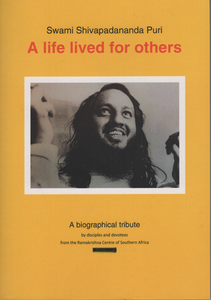
The free-to-read or download, 396-page Flipbook version of Swamiji’s biography, ‘A Life Lived For Others‘, is available by clicking HERE. If you’d prefer the PDF version, please click HERE.
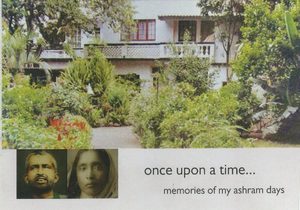
For our gurubhai Atmaprakash Kramer’s beautiful pictorial ‘memoir’ booklet of the Ramakrishna Centre of South Africa, Avoca Ashram, please click HERE.
There’s also a Facebook site for Swamiji’s posts now. They feature newer readings published more recently. Click HERE to view.
These recordings or the excerpts from them, were made from the early 1970s onward, by Mother Radha, a close devotee of Swamiji’s and edited for uploading here by our gurubhai and her son, Brother Tim. Please be mindful that what Swamiji was saying may have been specific to those with him at the time.