Daily Reading 73. Swamiji talks about brahmacharya, life stages and looking after the elderly.
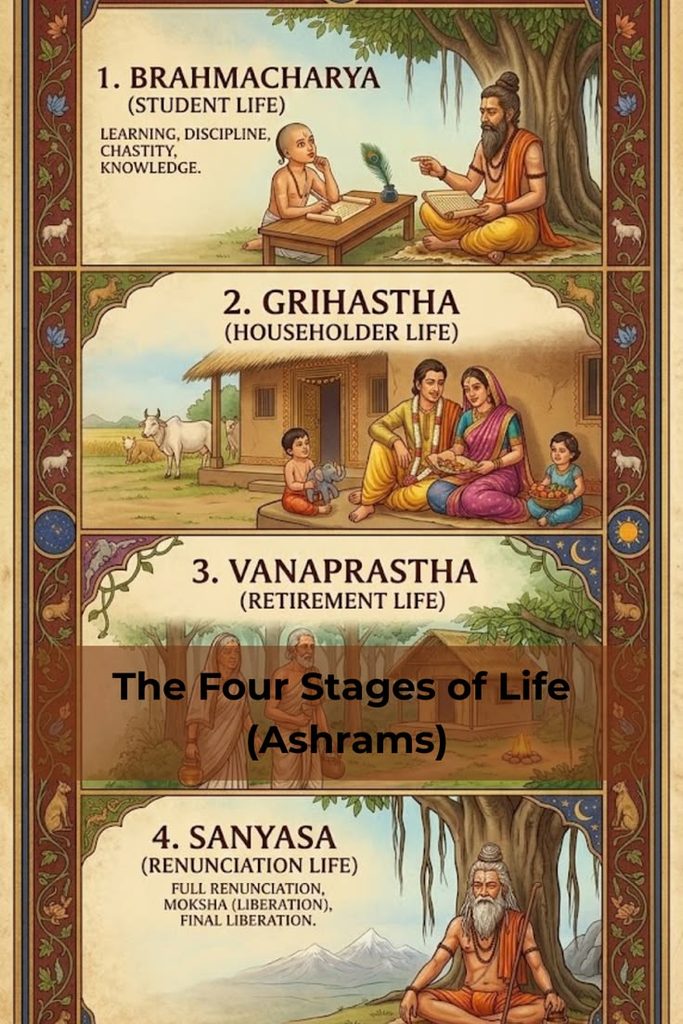
Taken from Mother Radha’s notes, written at Swamiji’s feet.
In the Upanishads we read: It is vital to observe brahmacharya. All the great ones, to realise the Truth, lived controlled lives, they gave up sense pleasures, and dedicated their lives and minds to God. For example, Mahatma Gandhi led a life of brahmacharya. Sri Ramakrishna did not chase his wife away, he worshipped God in [Holy Mother] Sri Sarada Devi.
Everyone is afraid of death. But when you realise you are immortal, there is no death. Then you turn away from earthly pleasures to something far higher. You cannot come to God without renunciation in thought, word and deed.
You may say, ‘Others have seen God, what about them?’ But a vision is relative. The Absolute is beyond seeing. The seer and the seen become one. The knower and the Known become one. Others go up slowly. It is most important to ask yourself: How intense is my feeling for God?
We at the ashram are all renunciates, but in degrees. Mahatma Gandhi failed four times in brahmacharya, but he did not give up. He went higher and higher.
Master [Sri Ramakrishna] is the ideal for the whole universe.
Be tenacious about wanting knowledge.
Swamiji on our treatment of the elderly: In traditional Hinduism there were no old age homes. Old age was a spiritual stage, it was an ashram [see footnote]. The Vanaprastha [post-marriage or worldly responsibilities] stage means you retire to do sadhana, to eat fruits [i.e. a simple sattvic diet], to become pure.
The mother of each house at that time had joy in selflessly serving the old ones. From small they learned, ‘I will serve my father and mother.’ But now we pay an old age home to look after them. Do you know how they miss their children? The children do not visit their parents even once in a month. In certain diseases, when they are very sick, they need touch and also need the attention of others.
In the Upanishads we read: If you have any spiritual doubts you must clear them then and there. The teacher [guru] is so full of compassion, he does not want to disturb you, he wants to take you from where you are.
Kings [i.e. leaders] must have clear discriminative [discernment] powers otherwise they will make mistakes. In the old days they chose kings because knowledge of the Self was valued as something far superior to the kingdom of wealth. As one understands, so one speaks.
You must do rituals till you are ready to do something else; for example: meditation. Your actions make you a demon or a god.
In the Upanishads we read: The teacher wants you to admit, in thought, word and deed, that you do not know; to admit you are ignorant [lacking sufficient insight, understanding or experience at that point – this is how Swamiji explained the term ‘ignorance’ to us].
In the past they did thirty two years of guru seva [service to the guru]; seva in thought, word and deed. You must have reverence for the guru. You are supposed to understand the teacher.
An avatar [Incarnation of God] comes to keep the word of the scriptures, and to rebuild our respect for the scriptures.
Give up whatever gives pleasure to the mind.
Footnote: The four life-stages were: 1) Brahmacharya (the student phase), Grihastha (marriage), Vanaprastha (contemplative, spiritually-focused, post-marriage and worldy responsibilities) and finally Sannyasa (renouncing and becoming a monk).
Underlined words are hypertext links to clarification, explanation or other sources. Just tap on them.
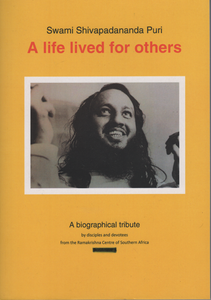
The free-to-read or download, 396-page Flipbook version of Swamiji’s biography, ‘A Life Lived For Others‘, is available by clicking HERE. If you’d prefer the PDF version, please click HERE.
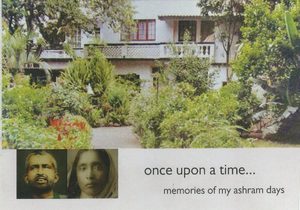
For our gurubhai Atmaprakash Kramer’s beautiful pictorial ‘memoir’ booklet of the Ramakrishna Centre of South Africa, Avoca Ashram, please click HERE.
There’s also a Facebook site for Swamiji’s posts now. They feature newer readings published more recently. Click HERE to view.
These recordings or the excerpts from them, were made from the early 1970s onward, by Mother Radha, a close devotee of Swamiji’s and edited for uploading here by our gurubhai and her son, Brother Tim. Please be mindful that what Swamiji was saying may have been specific to those with him at the time.