Monastic instructions continued…
[2nd President and Spiritual Head: the Ramakrishna Centre of South Africa]
DAILY READINGS
From Mother Radha's recordings of Swamiji
Day 744 continued
To be a homeless brother [monk or nun] he must train himself in many ways. He must be sensitive to blame and dishonor when he fails.
You can't say, 'Nobody saw what I did, so I am quite happy.' No. No sooner you fail in thought too you must be shameful. It must make you shameful. You must be sensitive, you must not be a paralyzed mind. You must be an active, sensitive mind.
He must keep his body, speech and mind pure if his life is to be pure. He must guard the gates of his five senses. He must not lose control of his mind for the sake of some passing pleasure.
Narada lost his senses when he saw a beautiful girl for a few seconds. What for?
He must not praise himself or rebuke others . . .
Don't run others down and try to boost yourself. Don't use yourself as an example so that others will be belittled. If you find that certain actions of yours will run others down then those actions too are also not right.
. . . and he must not be idle or given to lengthy sleep.
What time does a man, who knows he is going to make thousands of Rands [South African currency] every minute, open his business? If possible he will open for business at three o'clock in the morning to catch the first busload of passengers. Similarly, a monk should not waste his time in sleeping. He must wake up early and do his meditation and all his obligatory duties. On the other hand if you have sincerely worked hard and you are tired then it doesn't matter, because you know you are not taking advantage of the body and at the same time you are not making it lazy by oversleeping.
Moderation is the word. The Bhagavad Gita says, 'Moderation'. Buddha himself was a perfect embodiment of moderation. Not too much of anything. He says here you must not be idle. If people come to visit don't sit for two hours. That's not needed. Fifteen or twenty minutes is enough. Don't cater too much for them. You can say, 'Right, we have work to do; help me in the press; come, let's do something. Clean the shrine. Come on, have joy in serving.' Don't take the pose of a great guru and sit down for a long time. That's idleness. Never mind that you are hearing and speaking of God. Don't sit for long, or idle away your valuable time when you could be doing constructive things for your own life and for others.
In the evening you should have a time for quiet sitting and meditation and a short walk before retiring.
This book is talking to the sannyasis [monks, nuns – sannyasinis]. You must have a time set, not with people or public, a quiet time for meditating. Then before retiring you must take a short walk, he says.
For peaceful sleep he should rest on the right side with his feet together, his last thought should be of the time when he wishes to rise in the early morning.
He is setting the mental clock, deciding what time to rise. Gurudev [Swami Nischalananda Puri – Swamji's beloved Guru – and the 1st ] used to teach us this too. Look at the clock, watch it, and think, 'I'll get up at four o'clock.' Say it a couple of times, repeat God's name, and go to sleep. For a few days it will be this way and that way; but just as hunger comes at twelve o'clock, when your stomach starts bleeping in the form of the beating of the blood, so automatically the mind will wake you.
Early in the morning you should have another time for quiet sitting and meditation and a short walk afterwards.
Morning and evening you should do that. It doesn't mean go to somebody's house and sit down. No. Go and admire nature. Don't have friends to walk with. That is the worst thing you can do.
I take walks in the morning and evening. In the mornings I take a walk in my pyjamas. In the evening I take a walk with my dhoti [wearing cloth]. But when walking I don't like anybody with me. Nowadays Chakra [the ashram dog – pictured] is with me. That's all right. But while walking I take pride in repeating God's name. Every step I take I want to repeat it. Then I say to myself, 'Well if I don't say japa [meditative repetition of a mantra or one of the many names attributed to God] the whole day at least I know I've done japa with my feet instead of with the mala. I've walked and repeated God's name so the day is not wasted.'
I used to walk three times round the ashram. I would call it pradakshina [circumambulation] ; making pradakshina to Master [Sri Ramakrishna]. Beautiful.
At night you get a good rest. During the day, when you are tired, you can have a little rest and then carry on with your daily work. (This is for monks.)
During the whole day you should always maintain an alert mind keeping both body and mind under control, resisting all tendencies toward greed, anger, ignorance, sleepiness, inattention, regret, suspicion, and all worldly desires.
You must not become suspicious of others and they shouldn't do actions that will make others suspicious. During the day you must keep your mind alert, not sleepy.
Thus with his mind concentrated he should cultivate excellent wisdom and aim only at perfect enlightenment.
That's the only aim the homeless brother has in life. Not enlightenment but perfect enlightenment. Nothing else but sacrificing the whole lower self into the Higher Self.
If a homeless brother, forgetting himself, lapses into greed, gives way to anger and cherishes resentment, jealousy, conceit, self-praise or insincerity, he is like one carrying a keen two-edged sword covered only by a thin cloth. He is not a homeless brother simply because he wears a monk's rags and carries a begging bowl. He is not a homeless brother just because he recites scriptures. He is a man of straw and nothing more.
He is even lower than the householders [lay devotees]. He is supposed to be higher in a way. He is nothing better than straw which the householders trample under their feet. You find a lot of grass mats at home. He is lower than that.
Even if his outward appearance is that of a monk, if he cannot remove his worldly desires he is not a homeless brother. He is no more than an infant clothed in a monk's robe.
The monks are supposed to be the highest rung of society but if he lapses he is nothing less than a little child who hasn't entered any of the stages of society. From brahmacharya you enter other stages. But if, like a little child, he hasn't entered into them, he is ignorant.
Those who are able to concentrate and control the mind, who contain wisdom, who have removed all worldly desires and whose only purpose is to attain enlightenment, only these can be called the true homeless brothers. A true homeless brother determines to reach his goal of enlightenment even though he loses his last drop of blood and his bones crumble into powder. Such a man, trying his best, will finally attain the goal and give evidence of it by his ability to do the meritorious deeds of a homeless brother. The mission of a homeless brother is to carry forward the light of the Buddha's teaching. He must preach to everyone. He must wake up sleeping people. He must correct false ideas. He must help people to have a right view point. He must go everywhere to spread the teaching widely even at the risk of his own life.
Don't live a sheltered life, a protected life. Live a 'full of praise' life.
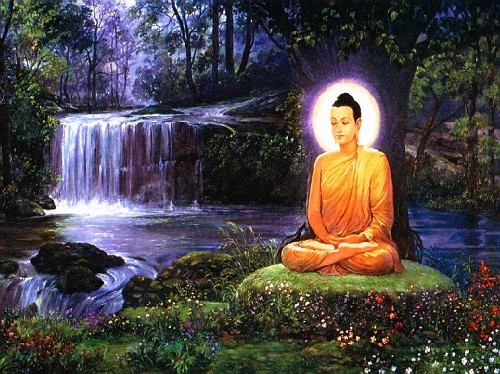
The mission of a homeless brother is not an easy one for he who aspires to it should wear Buddha's clothes, sit on Buddha's seat and enter into Buddha's room.
To wear Buddha's clothes means to be humble and to practise endurance. How humble Buddha was and how much endurance he practised. To sit on Buddha's seat means to see everything as non-essential and to have no attachments. All these things may be necessary but it is not necessary that they are essential. If you can do without it, it is non-essential. Have no attachment. To enter into Buddha's room means to share his all-embracing great compassion and to have sympathy for everyone. 'Everyone', means the saint and the sinner alike.
Those who wish to teach the Buddha's teachings acceptably must be concerned about four things. First, they must be concerned about their own behaviour.
How can you teach if your behaviour is bad?
Second, they must be concerned about their choice of words when they approach and teach people.
Swami Vivekananda used to receive wonderful literature from his brother disciples. But he wrote back scolding them saying, 'You must watch what kind of words you write about Sri Ramakrishna. Though he must have used those words they are not acceptable to the western world.' So you must watch the words when you approach and teach people.
Third, they must be concerned about their motive for teaching and the end they wish to accomplish.
What is the motive of your teaching? Is it for name, fame, position, gaining money? Or is your motive for them to gain love to God's lotus feet and thus reach Godhood? What is your motive?
And fourth, they must be concerned about the great compassion.
They must have compassion for all.
To be a good teacher of the dharma (here dharma means religion) then a brother must first of all have his feet well set on the ground of endurance.
You must be prepared to endure anything – insults, even death.
He must be modest. He must not be eccentric or desire publicity.
True modesty, not false modesty. What is the meaning of eccentric? Out of the ordinary. If you sit like this, go and stand like that, talk like so, people will say, 'Look, he is out of the ordinary. See, he is sitting under a tree, he is not sitting on a chair. What a good swami he is.'
He must constantly think of the emptiness of things …
When you look at a thing don't get attached to it. It has nothing. It has to perish – the tape recorder for instance. Don't think, 'It looks so nice, so I must buy it.' Be it a musical instrument, or a book, or a conch [shell] it has to go. Names and forms are all maya or the handiwork of maya. Going beyond maya will be going beyond name and form and attributes too.
. . . and he must not become attached to anything, anything but the Self. If he is thus concerned he will be capable of right conduct. Secondly he must exercise caution in approaching people and situations.
Ah. How many times have I told people this? You must be cautious. Each person is the unique handiwork of Mother Maya so each one has to be approached in a different way. It's like each one has a different chord and each chord is adjusted differently for different tunes, in different situations.
He must avoid people who are living evil lives or people of authority.
Because you will get caught in their authority. You'll start bribing them through the back door. Avoid them. Don't think, 'He's the principal so I am going to join him.' One day, who knows, that person may do something terrible. Watch it. Avoid authority lovingly. Yes, I was always afraid of people with authority – always in my life. Not afraid in the sense that I can't eat them up. No. I wanted to be far from them.
He must avoid women.
He is talking to the brothers, the sannyasis, you must remember that. He will tell the women, the sannyasinis, to avoid men. Just like Sri Ramakrishna's teachings, isn't it? He is not saying something for you to laugh at. Avoid them – don't hate them. One way to avoid them is to call them 'Divine Mother'. See your Mother, whom you worship, in them. For a long time I avoided them myself by seeing my own earthly mother in every woman. I used to see their face, their flesh, as my own mother that walks on Earth. In that way it could be avoided.
Then he must approach people in a friendly way. He must always remember that things rise from a combination of causes and conditions and, standing at that point, he must not blame or abuse them or speak of their mistakes or hold them in light esteem.
Don't blame them. Don't abuse them. And don't think lightly of them; because you are supposed to see the Self in everyone, nothing else.
Thirdly he must keep his mind peaceful, considering Buddha as his spiritual father, considering other homeless brothers who are training for enlightenment as his teachers.
Beautiful. Think of Swami Vivekananda and Swami Brahmananda meeting when Swami Vivekananda returned from America. See the relationship: One called the other 'father' because he saw the guru's eldest son as the guru. The other said, 'The eldest brother is the guru.' Both appreciated the father in the other.
'And looking upon everyone with great compassion' means your brothers who are marching, your sisters who are marching, should be your gurus. Even if they do something wrong you can learn something from that, you should not do it. And if they do something good, imbibe it. They are your teachers.
Then he must teach all men equally.
Don't have one favourite, all must be taught equally. You can only teach equally when you have compassion, when your behaviour is good and if you are only preaching one thing. Otherwise if you preach many things then you'll have to give somebody a little extra of this or that. That is why you are only preaching God; and you can only preach equally about God. Of what can I speak to you, if not God? I cannot speak to you of football or cricket.
Fourthly, he must let his spirit of compassion display itself, even as Buddha did, to the utmost degree.
Here display doesn't mean a bad display. When you find someone needing compassion, go to him, reach out, give it. Don't just sit there and look at it in a negative way.
On a pilgrimage Master's [Sri Ramakrishna's] train went through a village where the people were suffering terribly from starvation. So Sri Ramakrishna said, 'Mathur Babu [son in law of the Rani Rasmani, founder of the Kali Temple at Dakshinewar – and the one who took care of Master's physical needs], I am stopping here unless you give everybody a piece of cloth and some food. Do something.' A lot of rich people had passed through the same train station on their travels and had thought, 'What a poor place this is. They don't have even a piece of bread to eat. Look at them, no clothes.' Now the greatest thing while on pilgrimage is that you shouldn't stop. But Sri Ramakrishna considered pilgrimage dust, mere dirt compared with suffering. That's why He said, 'Unless you give these poor people a piece of cloth and some food, I am not going to move from here, I am going to sit with them.' Mathur was forced to do it. Display your compassion.
Especially, he should let his spirit of compassion flow out to those who do not know enough to seek enlightenment.
Don't look down upon the sinner, where your compassion should be greatest. In class who must the teacher pay more attention to? The student who is strong or the student who is weak?
He should wish that they might seek enlightenment; and then he should follow those wishes with unselfish effort to awaken their interest.
Not only to wish that they should get enlightened but he should 'follow those wishes'. You must do something about it. Push on.
I've read to you from page 194 to page 200. You can go and read it and follow that advice of Lord Buddha. This is for the sannyasis, those who are called 'the homeless brothers'.
1) Care should be taken by the reader to understand and take Swamiji's words in these postings, in context. Every teaching or instruction that he gave was specific to the people who were with Swamiji at the time. 2) Mouse-over the words highlighted in red in the posting for further explanation or links.
There are currently available, over 100 different CDs or DVDs with mp3 files, of Swamiji speaking. Please email timhoare@webmail.co.za to order. Click HERE for the second website on Swamiji's life and teachings.
Sri Ramakrishna Sri Sarada Devi Swami Vivekananda
Swami Nischalananda Swami Shivapadananda
The Gospel of Sri Ramakrishna - read online
Reference websites – please mouse over the name and click to connect:
Ramakrishna Math and Mission Ramakrishna Centre of South Africa Ramakrishna Dham