Swamiji reads and touches on a variety of topics – all designed to take us closer to God-realisation. Disc 140 track 7.
To listen to Swamiji speaking, please first fully open the post, and then click the link below.
Topic: Reading topic: The Meaning of God-Realisation.
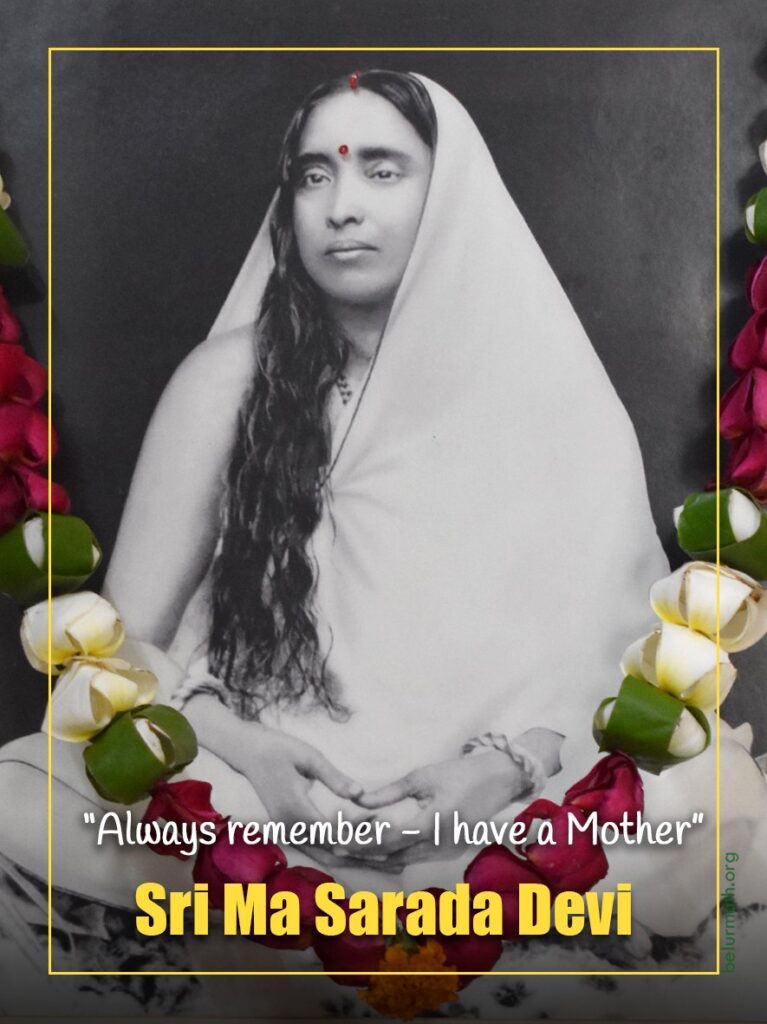
Disciple to Holy Mother Sri Sarada Devi: Mother, does the vision of God mean the attainment of knowledge, jnana and spiritual consciousness, chaitanya? Or does it signify something else? Mother: What else can it mean except the attainment of these? Does anybody mean to say that a man of realisation grows two horns? Swj: So the devotee [effectively] wants to know, does a person grow two horns? [i.e. are there exceptional external signs visible to ordinary people like us?] No. There’s an inner transformation that takes place. Referring to a devotee, Swamiji says, ‘What my girl?’ And repeats, ‘inner transformation.’
Mother: Everything depends upon karma, one’s past action. The moment one’s karma comes to an end, one realises God. That is one’s last birth, knowing God as one’s own. Swj: That’s a very catchy term, ‘one’s own’.
Disciple: I admit that the cessation of actions, karmaksha, spiritual disciplines and time, are the factors in the attainment of spiritual knowledge and consciousness, but if God is our very own, then can’t he reveal himself to his devotees by his mere will?
Mother: That is right. But who has this faith that he is ‘his own’? Who? All practise these disciplines because they think it is their duty to do so. But how many seek God?
[Clearly in answer to another question] Holy Mother says: I am your mother, and you are my child.
In your treatment of sadhus [holy people], you must be very, very, very careful. More especially so because we are the children of Master [Sri Ramakrishna]. We don’t only let ourselves down, we disgrace him. We repeat his name in vain. The [Christian] Bible says you must not repeat God’s name in vain. [Exodus 20:7] Especially Master’s. So you must be very, very careful. Mother was Mother because of that which she saw in Sri Ramakrishna, and she later on found in in her own self.
You see [Mother] Kali’s form is one of the forms to keep maya [God’s power of revealing only partial truth] away. Swamiji and the devotees chuckle. Swamiji: Nobody approaches. She’s approachable by herself. To herself.
Swamiji: But that particular person, whoever was the disciple, took it for granted, to say Mother will be there. She’s trying to indirectly draw their notice to the transitoriness of this world. Some look at it from the other side [they’ll be very blunt]. No, no, no. Don’t do that! Who knows? Man is here today, tomorrow he’s not. We’re reminding that one. He knows. That’s 100%. But read between Mother’s words. Don’t just look at what she’s telling.
He’s [the devotee] thinking she’s the body, he’s still thinking the other one is the body. And that’s why Mother is trying to draw their notice.
Mother: In a tender voice, choked with emotion, said, ‘Alas, how fond they are of me. I’m also very fond of them.’ Their eyes were moist with tears. The disciple was fanning her. She said to him in a most compassionate voice, ‘My child, I bless you from my heart that you live long, attain devotion and enjoy peace.’ Swj: Peace is the principal thing. One needs peace alone. Swamiji repeats: One needs peace, alone.
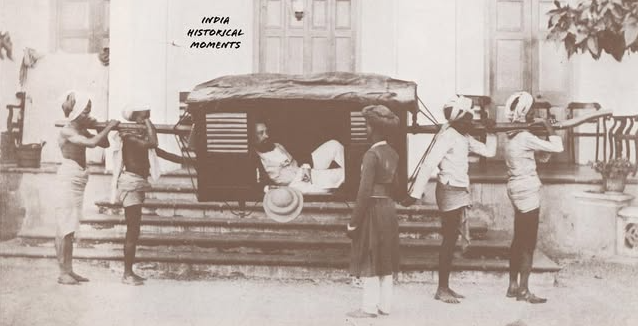
Reading from another source: [A devotee recalls] The Master [Sri Ramakrishna] replied in an excited voice, ‘What! Balaram’s family is in such trouble, and you hesitate to go? You’ll walk to Calcutta. Go on foot!’ At last, a palanquin was brought, and I set out from Dakshineswar. Swamiji comments that when somebody’s in trouble we mustn’t assume that Master [God] is the only saviour. No. Become selfless.
Disciple to Holy Mother: Don’t you want to come back to this earth in a human form for the sake of the devotees? Mother: Ah! Suffering in a human body? No more! No more. May I not be born again. The Master suffered, as he had taken on himself the sins of Girish [Girish Chandra Ghosh – the famous Bengali playwright and theatre director]. All our sufferings are on this earth. Is there anywhere else where people suffer from endless miseries on account of their egoism? And at last, they say, ‘Not I, not I, it is Thou, O God. It is Thou.’
Swj: Man [when he’s suffering] thinks about God more. Let the judge pass the death sentence and see what you think of. You don’t think about your wife, your children and all. You’re sitting there and praying, ‘God, save me. God do something.’ And your family is also running to the temple. You see? Suffering makes you think intensely about God. Before the trouble you think about your wife, the children, the nearest, the dearest.
You may get a phase where you don’t do sadhana at all. You see? There’s a negative way and a positive way of encouraging, depending on the other person’s attitude and standing in life at that particular time. That’s how I see it.
[Indistinct section in the recording]…. Sounds like… anything we do must be directed at going towards ‘It’ – God, spiritual growth/God consciousness. Anytime we get the desire we must go towards It. Anything we do, must go to It. Reading. Reading must become praise of It. Because it’s speaking about It as I’m reading. It’s reminding me of It.
See the mind how it works? You see what I’m talking about? Yes, look at Sunny [a devotee and dear gurubhai] and think your Deity has come. Don’t look at him as a man, then you’ll fight and quarrel. And when he looks [at you] he must think a deity has come.
Every physical happiness given, a sacrifice, must be thought to the deity. Then the mind will become pure and retract [withdraw] from the same [impure] things that it offers as sacrifice. First we get the ritual worship. The ritual worship when done so much, the mind becomes purified. The purified mind itself lets go of the ritual worship [when the time is right]. If you break the flower [off the budding fruit] beforehand, no fruit comes. Beforehand if you stop the ritual worship, then the desire will not end. Do it with purity of intention.
The image of the palanquin in this post is borrowed with gratitude from India Historical Moments.
The free-to-read, 396 page Flipbook version of Swamiji’s biography is available by clicking HERE.