Talks Excerpt 568. Swamiji speaks about ‘meritorious’ deeds.
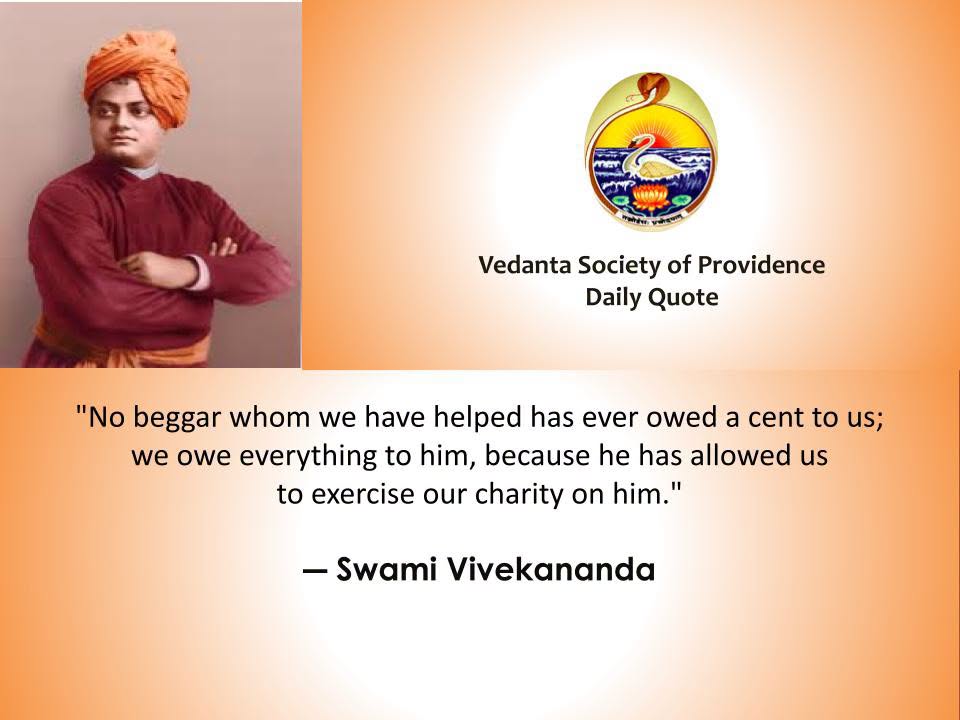
From Mother Radha’s recordings of Swamiji.
In Patanjali’s Yoga Sutras we find the virtues:
1. Non-stealing. Besides the obvious, this also means that if there is a sale somewhere and you grab all the shoes before your poor neighbour, then you are a rogue to that extent. You have stolen from your neighbour. You are not going to wear them all, as a matter of fact most of the shoes will be lying in a cupboard unused.
2. Not telling lies. One of the greatest sins on the path of humanity is speaking lies. Lies are things that will injure your meditation. At all times be truthful. If you cannot be truthful then be silent. [Swamiji used to say to us that if the truth, even if necessary, would cause hurt, then tell that truth in the way that causes least injury.]
3. Make money righteously. If you want to become rich, become rich by all means, but do not become so rich that you will be buried in your money. It would be better if you gave up all that money for the sake of the poor. Sri Ramakrishna says that it is the rightful duty of people to make money; but with that money one must serve the children of God. To that extent you are buying your security or merit. But if you are giving money away for name and fame then to that extent you are not gaining.
Once, Lord Shiva and Lord Vishnu found a poor man praying to Lord Vishnu. ‘O Lord, bless me,’ he prayed. Hearing this the Lord said, ‘I bless you.’ Soon there was a flood. The man shouted, ‘Protect me, Lord Vishnu, protect me.’ But the flood washed him away.
This seems to be a very cruel matter. Lord Shiva asked, ‘Is this how you treat your devotees?’ Lord Vishnu said, ‘This is the right way to treat them. Now show me how you treat your devotees.’
Lord Shiva took him to a king who prayed day and night to Lord Shiva for more wealth. The Lord showered him with lots of money. And the more he asked for, the more the Lord gave him. The king would say, ‘I am the king. Do you see how my Lord blesses me with money, money, money? Wherever I walk, Mother Lakshmi [the goddess of wealth] follows me.’
The king happened to be doing a Maha Yajna [great sacrifice]. It was a prescribed rule that he should feed the beggars – but only at certain times. Lord Shiva and Lord Vishnu disguised themselves as beggars and went there. No sooner had they reached the gate than the gatekeeper said, ‘Sorry! You’re too late. You’d better go now.’ They asked, ‘Why? Please give us some food.’ ‘But don’t you know that the merit time is over?’ asked the gatekeeper. Lord Shiva said, ‘I am hungry. What do I know about merit? I came for some food. I heard the king is so charitable, giving away a lot of food. Please let us eat.’ But the gate-keeper pushed them out and they had to leave.
Lord Vishnu asked Lord Shiva, ‘Is this how your devotees behave? You give them money and see what they do. Come, I shall show you my two devotees, the ones that died. Look. There they are, Jaya and Vijaya, my servants in heaven. This is how I bless them: I take away everything they have but I give them authority over my gate. You give them everything here on Earth and what do they give you?’
Many rich people who have name and fame are like that. On the other hand some rich people are very good. They follow the rules and become richer. God wants to give them more because they are giving charity sincerely. They do not cut across the rules of God’s dharma. What is merit and what is demerit when my stomach is empty?
Am I to give only out of motivation or should I try to uplift the poor and the downtrodden? The Lord does not see if the person is a saint or a sinner. He showers his sunshine and his rain on saint and sinner alike. ‘You have the rights to the flower and the fruit,’ says the Lord, ‘and I have the rights only to bring rain to you. Mine is only to give you blessings; but your karmas can turn into dharma or adharma.’
If you think that you can practise vices and still do meditation you are wrong. In the scriptures all the people with powers, and all those who wanted power, came to naught in the end. Ravana is an example of this. Ravana was a great bhakta of Lord Shiva and look at his plight, instead of becoming desireless he became full of desire.
NEW! For our Gurubhai Atmaprakash Kramer’s beautiful pictorial ‘memoir’ of the Ramakrishna Centre of South Africa, Avoca Ashram, please click HERE.
The free-to-read or download, 396-page Flipbook version of Swamiji’s biography is available by clicking HERE. If you’d prefer the PDF version, please click HERE.
These recordings or the excerpts from them, were made from the early 1970s onward, by Mother Radha, a close devotee of Swamiji’s and edited for uploading here by our gurubhai and her son, Brother Tim. Please be mindful that what Swamiji was saying may have been specific to an individual or a group of people with him, at the time.