Swamiji speaks on physical exercise, independence, and unmotivated love.
Swamiji quotes Dr Anoop Seebaran, one of our dear Gurubhais, and key care-takers of Swamiji's bodily health over decades, saying that Tatha Yoga is practised, so that one can use Hatha Yoga, as a step to reach Raja yoga.
Swami says that despite its grand name (the King of yogas or Royal Path), Raja yoga means nothing else but mind control.
Says Swamiji: Physical exercise is meant to be performed in such a way, that ultimately it must be conducive to mind and sense control. So we can use it to realise the highest aim of human life, which is?.. God realisation.
Swamiji goes on to describe the ideal characteristics of a sadhaka [spiritual seeker] – particularly the need for independence in an aspirant. Without obligation to anyone. Swamiji's emphasis is on retaining independence of mind in order to reach God.
The motive behind why some people offer help, comes into the equation. And the potential burden of developing an obligation to the person giving aid or assistance. Swamiji demonstrates how insidious the process can be, of moving from receiving one small means of assistance, to creating a dependency. [The concept of Aparigraha – non-possessiveness – is an interesting addition.]
So taking a gift or favour can lead to a downfall, says Swamiji. He describes the state of mind in which any gifts should be received. 'But I beg you to help me achieve the highest purity, by avoiding giving me gifts which will drag my mind down. But you can give me the highest gift when you come near me, and speak about God – because that is what I want. After all, what the person likes, is what you will give him.'
Swamiji shares guidelines for gift-giving, from which we can all learn. Including gifts in the form of prayer, without the person even knowing – for that person's spiritual progress. [Swamiji said so many times that prayer for others works on their subtle bodies and minds, and it really helps.]
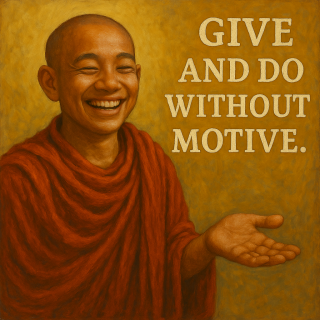
Swamiji goes on to talk about the origins of everything through love, and describes what we've turned it into, through our lack of understanding. He elaborates on how dangerous our human concept is, of love. He speaks about the difference between the spirit of the word love, and the way we interpret it. If our 'love' demands even the slightest bit of admiration [or gratitude] in return for it, it is still tainted with personal motive. It is not yet unconditional love.
Therefore a real bhakta will not say, 'I love God because he looks after me.'
Swamiji concludes the discussion by telling a story about a Guru giving his disciples each a piece of paper on which they were to write down why they loved God. The guru collected the pieces of paper, and we can learn a beautiful lesson from the response of just one of the chelas. And that, says Swamiji, is the kind of love we must try to reach.
To listen to these deeply memorable guidelines, please click on the link below. Jai Sri Ramakrishna!
Duration: 07:58
The original audio recordings of these posts were made by close Ramakrishna Centre of South Africa and Swami Shivapadananda devotee, Mother Radha. The audio editing and noise reduction of the original 1970s-onwards tapes, has been lovingly engineered, over many years, by her son and our dear gurubhai, Brother Tim. May Sri Ramakrishna and Swamiji bless them both.
Admin tip: Underlined words are links. If you click on them, they'll take you to an explanation of the particular word or term. [In these overviews, Admin comments are typically in a smaller green font, and square bracketed, like this statement.]
Dear reader, if you spot typos or or other errors, please feel free to email the site admin on info@imbizo.com with your suggested correction/s or ideas for improvement.
Context: As always, care should be taken to remember that what Swamiji was saying, may have been very specific to the needs of people with him at the time. Please bear this in mind.
Links to our Guruparampara (spiritual lineage) organisations, which will broaden your knowledge base: Ramakrishna Math and Mission and our alma maters, the Ramakrishna Centre of South Africa and the Sri Sarada Devi Ashram in Durban.
Today's post image was created in Microsoft Co-Pilot AI.