Talk Excerpts 718 and 719 combined. Swamiji differentiates between strictly rules-bound and devotional worship.
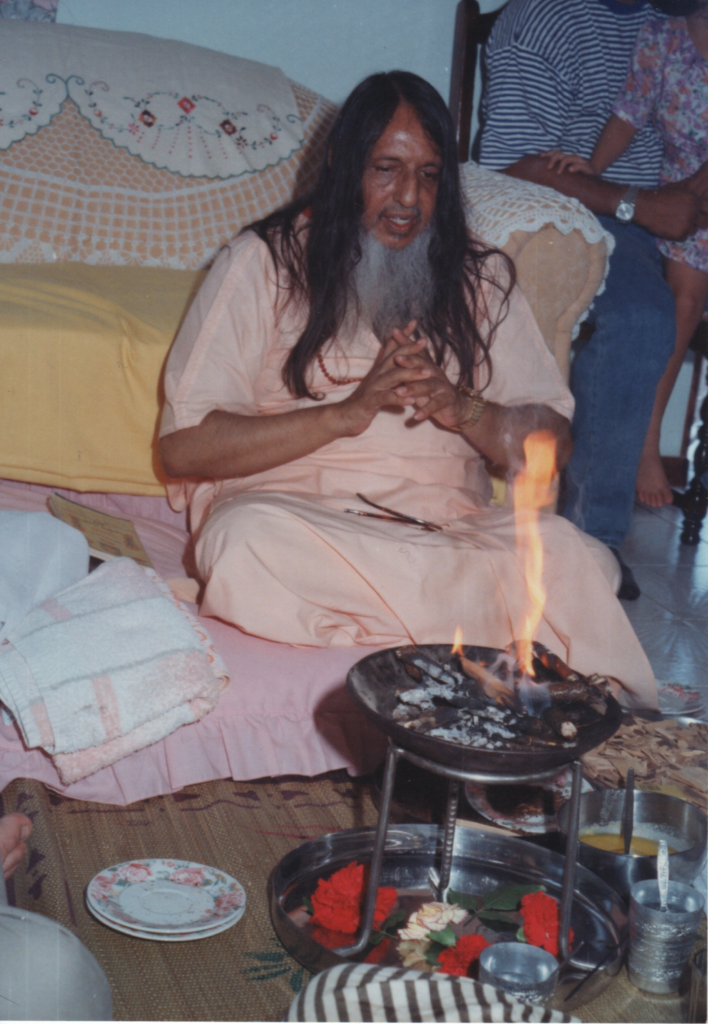
From Mother Radha’s recordings of Swamiji.
Shiva Puja is of two kinds. One is scriptural and the other is devotional – from the heart. The scriptural books of ritual worship of specific deities are called Agamas. Nigamas focus on spiritual and philosophical teachings.
In one there are technical exercises, scriptural methods. You read which side you must face, what kind of hawan samagri you must use, what kind of a statue [murti] you must have, what mantra you must chant, and if you make a slight mistake what will happen to you. In this way, out of fear, you will have great discipline.
The other way is discipline out of love [bhakti]. An example of this is the hunter who offered worship to Lord Shiva. One day he saw Lord Shiva’s eye was watering and bleeding so he took out one of his own eyes and put it in place of the watering eye. But he noticed the Lord’s other eye was also watering and bleeding so he took out his other eye and offered it to the Lord. Then suddenly both eyes became whole and he had the divine vision of the Lord. Meaning if you offer your all, then God becomes alive to you.
Neither method is wrong. The scriptural method needs a little extra caution, while with the non-scriptural method you worship like an innocent child. Sit on his [God’s] head or sit on his toes, it does not matter; he knows we are His children. Even Christ said you have to become like little children. Not childish, but childlike.
Similarly you can worship Christ with all the paraphernalia in the scriptural way, or you can worship him according to the purity of your heart, and call upon him wherever you like, in whatever you are doing. He is our very own. He will come. He has to reveal Himself.
Excerpt 719:
Ritual worship is a kind of spiritual discipline. If a man cannot do ritual worship, I cannot see how he will meditate. He thinks he is meditating, but his mind is not fixed on God. Meditation is very good, for it directs us to think about God. You begin by lighting a candle. Focus on the steady flame, which reminds us of the radiance of the Atman within. As you persevere, through regular practice, you become merged in God’s bliss.
Breathing is a kind of work; meditation is a kind of work. Every work is a ritual. The simplest ritual worship taught to the child should be to offer love to God – and that is represented by flowers. The simplest way to offer love to God is water. So offer water and flowers to God.
The details of ritual worship are found in the Vedas. In the Bhagavad Gita, Sri Krishna Bhagavan gives us the simplest method to offer worship or puja. The Lord says, ‘Whoever offers me with devotion, a leaf, a flower, a fruit or even water, that pious offering of the pure in heart, I accept.’ How much simpler can the Lord make it for us? The important idea is ‘with devotion‘. This means: with concentration and love. Pure in heart means, without a motive. Make offerings through love and not because you want something in return.
While chanting the Gayatri Mantra people usually offered water. The Gayatri Mantra is the highest and greatest mantra because it only asks for enlightenment, understanding, and for one to travel on the right path, the path of dharma. If the Gayatri Mantra can benefit all of us, very good. It is said that the Gayatri Mantra should not be given to everyone. One has to prepare oneself to receive it. Be truthful; make a habit of regular prayer and be righteous [dharmic]. This special mantra can be given to anyone who can understand it, and can lead a fruitful life.
As Master’s [Sri Ramakrishna’s] devotees, we should learn the Gayatri Mantra of Sri Ramakrishna:
Om Ramakrishnaya vidmahe gadadharaya dhimahi; Tanno devah prachodayat.
The free-to-read or download, 396-page Flipbook version of Swamiji’s biography, ‘A Life Lived For Others‘, is available by clicking HERE. If you’d prefer the PDF version, please click HERE.
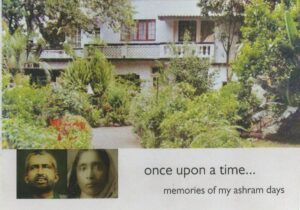
For our gurubhai Atmaprakash Kramer’s beautiful pictorial booklet, ‘Memories of my ashram days‘ at the Ramakrishna Centre of South Africa, Avoca Ashram, please click HERE.
These recordings or the excerpts from them, were made from the early 1970s onward, by Mother Radha, a close devotee of Swamiji’s and edited for uploading here by our gurubhai and her son, Brother Tim. Please be mindful that what Swamiji was saying may have been with him at the time.