Talk Excerpts 720 to 725 inclusive. Swamiji shares thinking and behaviour-altering advice for spiritual aspirants.
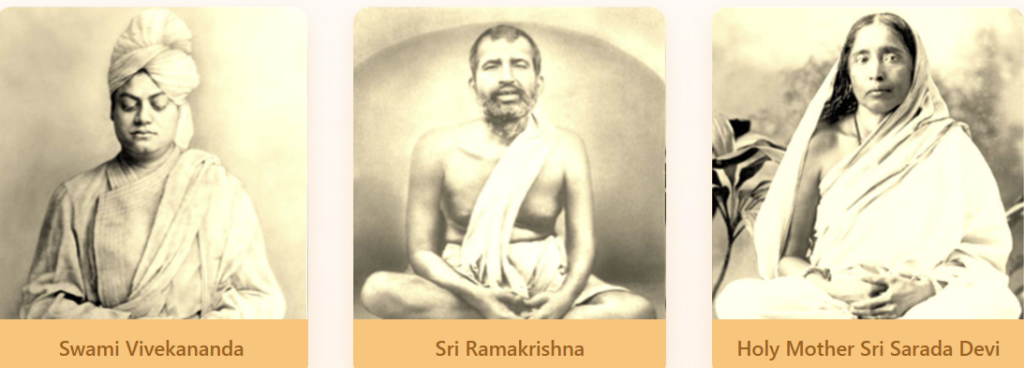
From Mother Radha’s recordings of Swamiji.
Excerpt 720: [Swamiji reads] . . . one must turn the mind away before it gets attached to any object, otherwise it becomes an impossible task afterwards.
It is a pity that after getting the mind under control for a certain period of time, people let it loose. When it runs after many things, for the second time, it takes a longer time to control the mind because it now enjoys the so-called freedom and does not want to be checked.
At first the mind did not know these tricks, so you were able to get it under control quicker. But once it runs outside it will not come back into the ‘cage’. Also, if you do wrong once, then next time you will continue doing wrong, because the mind will say, ‘The first time I did not get caught, so I will do it again.’
. . . if one gives up these enjoyments (lust and greed) one verily renounces the world.
You do not have to put on the [gerua] garb to renounce. If you can overcome lust and greed, you are renouncing the world. It does not matter what garb you are wearing. The monk wears the garb for self-protection and to remind himself that he is travelling the path of renunciation. The [sight of the] garb also helps others to think about the Great Being called God.
Vishnu vastra shiva rupam. The gerua mantra says: It is Lord Vishnu’s preserving power that is this cloth and it is the form of Lord Shiva, a veritable form of renunciation and knowledge [jnana].
Excerpt 721: [Swamiji reads] . . . innocent [so-called ‘white’] lies are untruths all the same.
Sri Ramakrishna said to one of his devotees (Jadu Mallik) that he would go and visit him on a particular day. But the Master had many visitors on that day and could not go. Late that night he remembered his promise. He asked for a lantern and went to Jadu’s house, but found the gate locked. He put one foot inside the yard and called out, ’See, Jadu! I have come.’ Do you see how Master stuck to truth? This may seem a senseless action by the Master. No, once you get into the habit of doing everything truthfully, your conscience hurts you and makes you do the truthful thing.
. . . wishing to keep the incident of the Kalighat priest kicking him a secret, the Master asked Hriday his nephew, to elicit from him a promise not to mention it to anybody. Hriday at first objected, but Sri Ramakrishna insisted. He asked Master to promise three times; and then Master remarked, ‘Now it will never escape my lips.’
Swamiji explains: Mathur Babu’s family priest became jealous of Sri Ramakrishna because Sri Ramakrishna was naturally getting name, fame, position and adoration. So, one day the family priest kicked the Master. Sri Ramakrishna knew that if Mathur Babu came to know about it he would get rid of that priest. So he made Hriday ask him three times to promise that he would not tell anybody. Such was Master’s compassion that he did not want the priest to be without a job, no matter the circumstances. And Master never mentioned it to anybody while the priest was working there.
Excerpt 722: [Swamiji reads] . . . to be absolutely frank and open in one’s dealings is real truthfulness.
Pandit Nehru’s advice to his daughter on her marriage was, ‘No matter what you do, do not keep a secret from your husband. There is to be no secret between you two.’ Thus he gave a key to observe her fidelity.
. . . it is very difficult to remove oneself from it [untruth and falsehood].
A lot of people come to me and say, ‘Oh, but it’s difficult.’ I know it’s difficult. That is why you are a king of creation; that is why I am giving it to you to do. It is difficult. Why should I give you all the easy things to do?
[To a devotee who wished to leave the city] . . . if you go now it will be setting a bad example.
Master’s [Sri Ramakrishna’s] children [devotees/disciples] were very conscious that they set a good example. When I went to Belur Math, I asked Swami Satprakashananda, ‘Please give me some instructions or advice on how to lead a spiritual life.’ Do you know what he said? ‘Do not worry, Thakur [Master] will do everything. Only you must become a good example, set an example of a perfect sadhu.’ That was his advice.
. . . look to the Atman, not to the body. Practise fixing the mind on the Atman.
Practise this while walking, talking, crossing the road, sitting. Try all the time to bring your mind on to the Chosen Ideal, the Atman, the Absolute.
Excerpt 723: [Swami reads] . . . one gets attached to objects by constantly thinking of them. From attachment comes longing and from longing, anger.
Suppose I say, ‘I want that car. I must have that car.’ Somehow, I am not able to get the car, even though I try. This leads to anger and frustration. See how anger comes? My attachment was the first step that allowed me to become angry.
. . . anger is a concentrated form of lust.
The author is saying to the brahmacharis and the sannyasis: ‘If you keep away from the opposite sex it does not necessarily mean that you are a brahmachari. If you have anger you are definitely breaking your vows.’
. . . never think of transient [impermanent] things. That way you can escape attachment.
Then is it a negative instruction? No. You must think about the Atman. Do not let your mind cling to something which is transitory. It is better to let your mind think of that which is eternal and capable of giving ultimate peace, and that is the Atman.
. . . through whatever reason the restless, unsteady mind wanders away, let him – curbing it from that – bring it under the sway of the Self alone.
Practise is very, very, important. Even if you practise unconsciously it is very helpful. Please believe me, you will have a sense of victory.
Excerpt 724: [Swamiji reads] . . . the mind must again and again be brought back to the Atman. It is the nature of the mind to be fickle and restless.
Do not ask the question, ‘Why is my mind doing this?’ Because its nature is to be fickle and restless – like a naughty child.
. . . but the mind, at last, will come under your control and remain calmly fixed on the Atman. At first you are to transcend tamas . . .
To transcend tamas means: no oversleeping, no laziness. Do not rely on others to do things for you. Be active and self-reliant so that you do not become lazy.
That is why Guruji [our Ramakrishna Centre of South Africa spiritual ‘great grandfather’ – Swami Purushottamananda Puri] – at the age of 89, would slowly take his dhoti to the Ganges, wash it, dry it, put it on, and then come back. Therefore, the disciples could not take advantage of him. He was independent of their effort or help. And perchance if the disciples did something for him, they felt very privileged.
Devotee: What does the word ‘love’ signify in the scriptures? Swamiji: In short: yama and niyama. Do not do those things that are not supposed to be done by a sadhaka. ‘Love’ here simply means love the Atman in everybody or love your deity in all of creation. Love here also means: do not take very drastic actions to change a situation, otherwise everyone’s mind will become more agitated. Take a drunkard for instance: If you suddenly stop him from drinking, instead of doing it gradually, then he will be thinking more about drink than before.
Devotee: I would imagine that at Master’s [Sri Ramakrishna’s] level there would not be any ‘wicked’ and there would not be any ‘good’. Swamiji: Yes, Master was above the pairs of opposites. Remember, Master was an acharya, he was a spiritual teacher; a Guru. He not only realised the Soul, but he also had to teach the world; he had to help people go forward from where they were.
Excerpt 725: As long as you have not realised God, anything that stands between you and realising God will [and must] be treated as maya. Master had to give instructions to help the devotees to progress towards God.
By Master’s grace, sometimes I also give one person a particular instruction but to another person, I will say something totally different. I will not say the same thing. It is difficult to fathom these ideas. Only God knows.
One activity or thought may be good for one person but not for another. Therefore, Master says that we must take a person from where he or she is; and guide them forward. One jacket cannot fit everyone.
When Master told [Holy] Mother Sarada [Devi] not to overfeed the disciples, Holy Mother used to say, ‘Thakurji, please do not worry about how I am feeding them. I will see to their liberation [moksha].’ Master understood that Mother Sarada was giving them prasad. She was manifesting Her aspect as Motherhood of God. And what She served was spiritual consciousness. While remembering this incident we can only think of Holy Mother removing Maya; removing ignorance. Sri Sarada Devi is not an ordinary mother. She can digest what we can’t. It will not give any stomach trouble. Normally with overeating, the mind becomes restless, or you can have bad dreams or nightmares.
The free-to-read or download, 396-page Flipbook version of Swamiji’s biography, ‘A Life Lived For Others‘, is available by clicking HERE. If you’d prefer the PDF version, please click HERE.

For our gurubhai Atmaprakash Kramer’s beautiful pictorial booklet, ‘Memories of my ashram days‘ at the Ramakrishna Centre of South Africa, Avoca Ashram, please click HERE.
These recordings or the excerpts from them, were made from the early 1970s onward, by Mother Radha, a close devotee of Swamiji’s and edited for uploading here by our gurubhai and her son, Brother Tim. Please be mindful that what Swamiji was saying may have been specific to an individual or a group of people with him, at the time.