Talks Excerpt 571 to 576 inclusive. Swamiji gives detailed advice on meditation.
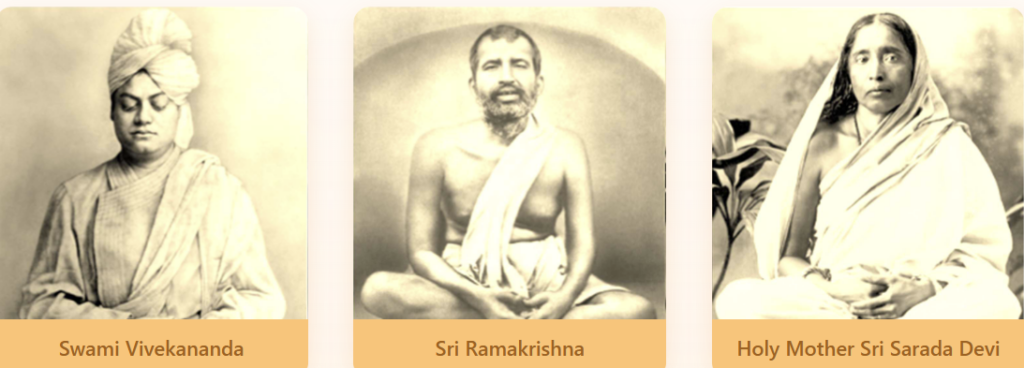
From Mother Radha’s recordings of Swamiji.
[Dear Devotee, we’ve clustered these 6 Talks Excerpts together, so that you have the entire meditation instruction process under one roof as it were. Rather than tracking back and forth through 6 separate postings.]
[Talks Excerpt 571]: The preparation for meditation is important. Firstly, you must have a comfortable asana. You do not have to sit in padmasana [lotus position] or siddhasana if it is not comfortable. Sit in the asana [position or posture] that you are most comfortable with, and in which you can sit for long periods. That is the first rule.
Secondly, your head, neck and spine must be in a straight line. There are about seventy two thousand nerves in the body, the Rishis say, and each time we twist or turn, the current goes somewhere else. That is why you are not supposed to move about in meditation. You can be comfortable as long as your head, neck and spine are in a straight line.
Thirdly, you must send out good thoughts, thoughts of love and peace, to the whole universe. Peace be to the east, peace be to the north, peace be to the south, peace be to the west, peace above and peace below. Om Dyauh Shanti (ॐ द्यौः शान्तिः) – peace everywhere. Sarveshaam mangalam bhavatu – may there be good to all. Beautiful. Say this for the whole world and sit like that, calmly.
Now look at your guru seated on the thousand-petalled lotus on your head. Think of him as being full of knowledge and full of purity. Think of him as the Liberated One, God Himself, come down to liberate you. Meditate on that guru for at least five or ten minutes, or as time allows.
[From Talks Excerpt 572]: The next part that you must follow is dhyanam. Dhyanam means you meditate. I will give you one example: Let us say Ganesha is your deity, and he is seated on a lotus in your heart. Then you say this mantra:
गजाननं भूतगणादि सेवितं
कपित्थ जम्बू फल चारु भक्षणम् ।
उमासुतं शोक विनाश कारणम्
नमामि विघ्नेश्वर पाद पङ्कजम् ॥
Transliteration (English):
Gajānanaṃ bhūta gaṇādi sēvitaṃ
kapittha jambū phala cāru bhakṣaṇam |
Umāsutaṃ śoka vināśa kāraṇaṃ
namāmi vighnēśvara pāda paṅkajam ||
Maybe you do not know Sanskrit so you can say in English:
‘The Lord has taken the form of Ganesha. He has an elephant face and is draped with a yellow dhoti. He has four arms: in one hand he has a whip; with another hand he is blessing; with another hand he is saying, ‘Fear not,’ and with his fourth hand he has a ladhu or a fruit. He has lotus feet (look at his feet and see that they are lotus feet) and I prostrate to him.’ Mentally prostrate to him within yourself.
Now you offer your deity something. You may offer him any five or ten things, whatever you like. I like to offer agarbatti. I light it and wave it round the face of the deity three times. Then I take a little chandan and put it on the deity’s forehead. Then I take a little bit of sweetmeat [prasadum] and I feed him.
After feeding him I offer a little water. Then I say, ‘Lord, now sit in a firm asana [posture, position, place] inside me so I will also be firm.’ Then I meditate for as long as I can . . . .
[Talks Excerpt 573]: Now for the meditation itself. You repeat the guru mantra and at the same time you look at the Deity. Your guru mantra should not be heard by anybody. But you can say it first in a whisper, so that only you and the Deity can hear it. Thereafter, you chant it silently without moving your lips or your tongue. You will find that sometimes when you are silent your tongue is still moving but you are not aware of it. Now you meditate. Meditate in such a way that your mind is attached to the form of the Lord.
It is best to do the mantra one hundred and eight times. You may do it with a japa mala or you may count with your fingers. After one hundred and eight times, I put my hands here [near the heart], this is for meditation on God with form and meditate on Him.
Go on meditating with love, with devotion, with sincerity. Love. Devotion. Sincerity. Meditate and at the same time reflect on the qualities and attributes of that Deity. He is Almighty. He is One without a second. He is the embodiment of all the powers in this world. Whatever you ask, whatever you need, that the Lord will give. This should go on for half an hour in the beginning and you will find that the time goes so fast.
Now you say lovingly, consciously to your Deity who is seated in your heart, ‘O Lord, O Mother, come up now and sit in the throat chakra.’ Let your Deity come up from the heart in your imagination. Let it sit in the vishuddha [throat] chakra and meditate on it there for at least two minutes. See the Deity as you saw it in your heart. After you have seen it there for two minutes, you then say to your Deity, ‘Lord, come and sit on the ajna chakra, the centre between the eyebrows.’ See your Deity there for another two minutes with the same love. After that is done, say, ‘Lord, come now onto the sahasrara chakra, the thousand petalled lotus’ [on the crown of the head]. But, as the Deity is going to the sahasrara, your guru merges in the Deity. Now your Deity is seated there.
You must try to absorb the guru in the Deity. Even if you cannot [initially] find out how to merge it, let it go to the sahasrara. Let the Deity occupy that space because that means that the guru is merged with the Deity.
Now you meditate there for at least five minutes. Then you say, ‘O Lord, come now to the ajna chakra.’ You bring it there and meditate on the deity because your guru has merged in the Deity. Meditate there for at least another three to five minutes. When you have finished that, you say to your Deity, ‘Lord, come and sit in the vishuddha chakra.’ Again you make the Deity sit in the throat chakra. And there you again meditate for three to five minutes.
Look at the Deity with all the love and at the same time keep on repeating the mantra. When you are taking the Deity up you continue repeating the mantra. When you are coming down you continue repeating the mantra.
After three to five minutes you say to the Deity, ‘Lord, now come into the space where I meditate on you,’ (that is in your heart or right in the middle of your chest) and let the Deity sit there. You utter your mantra for another half an hour, just as you did before taking the Deity up.
After half an hour again pray to your Deity for love, devotion, faith and conviction. Then, as you did in the beginning, send out peaceful thoughts or say the mantra that wishes the whole world peace.
[Talks Excerpt 574]: Now let your Deity become merged in the whole of creation. Feel that it is penetrating your whole body and through your body, merged into the whole of creation. Thus you become Vishwaroop [the universal form of the Deity].
Ishavasya Upanishad: [The opening Shloka]: Isha vaasyam idagung sarvam; yat kimca jagatyaam jagat; tena tyaktena bhunjeethaa; ma gridhah kasyasvit dhanam. [Freely translated, it means] ‘I renounce all my people’s things. I renounce all duality and have taken refuge in that One who permeates everything.’
After doing this if you want to repeat any other mantras, or any other shlokas you may repeat them. Do this with vigour, do it with love, do it with rhythm. This will give you stability of mind. Calmly sit like that. Open your eyes. Look at the whole world calmly. Your Deity is hidden in the whole of creation. Your Deity is the space. Do not get up straight away. Read some literature on your Deity if you like. It is better to read something about your Deity because it will increase love for that Deity. Or read any other holy book for about five or ten minutes, whatever you feel like, and then slowly prostrate.
Get up with this drunkenness of God permeating everything. Then go about your daily work. Hari Om Tat Sat.
[Talks Excerpt 575]:
While you are meditating, images of other deities will come into your mind. If you are meditating on Sri Ramakrishna, Lord Shiva’s image or Mother Kali’s form may come into your mind. Do not push this image away. Our gurus say, ‘Look at it for a little while. Then merge it into your Deity’s form.’ Let the other deities be respected and merged into your Deity. You must picture your Deity regardless of whatever other mantras come to mind.
This meditation I have described is meditation on God with form. In the Bhagavad Gita Sri Krishna rightly explains to Arjuna that it is difficult to meditate on God without form, on His unmanifest aspect. It is easy to meditate on His form and forms.
As a beginner you must start off with half an hour and keep it at half an hour for six months. Do not do more than that. If, on the other hand, the mind wants to do less, push it for the full half hour. After six months you can do five minutes more. Continue like that for three months and after another three months you can increase it until you reach one hour. After that you do not have to keep to time, it will take its own course.
After meditation, if you want to sing, you can lovingly sing a kirtan. You can sing before meditation too, if you want.
Devotee: Swamiji, when we are meditating how will we know how long we have been sitting for? Swamiji: If I say, ‘You will know,’ you may not believe me, but you will know. When you are almost reaching that half hour, your mind will start telling you. Otherwise you can use an alarm clock
[Talks Excerpt 576]: Question: During the meditation period, after doing the mala, Swamiji said we must meditate on God’s qualities. Is that without repeating His name at all? Swamiji: Repeat it, son, because ‘repeating His name’ is the trick. If you do not repeat His name your mind will run here and there.
Devotee: When we are trying to concentrate on the Deity’s form what happens if the form does not come to mind? What can we do in this case? Swamiji: When the form does not come to mind, provided you have done your dhyana sloka, do not worry. Just keep your mind in that particular spot where you are meditating.
Devotee: There are times when we are going through the guru mantra very mechanically. Instead of this, is sitting down silently and thinking about the form perhaps more productive? Swamiji: No, no, no. You must get your mind to do the guru mantra and to think of the form. Make it productive. Your mind will revolt. It will tell you all sorts of things. That mind is a rogue because you are a rogue. Do not worry about this mechanical feeling. Just do it. It is the same as when you start riding a wild horse. It will drop you a few times but slowly you break that horse in. That horse must listen to you. You must not listen to the horse. Who are you to judge your own spirituality? God will judge it for you. When you are trying hard, He Himself will provide things for you. Otherwise, if you find ways and means to change this routine, God will let you keep on finding ways and means.
There is a story about a dhobi [washerman] who was washing some clothes when a bhakta of Lord Vishnu came along. He started singing God’s name and walking on the washing. The dhobi, of course, got angry and started kicking the bhakta. Lord Vishnu got this very urgent message, so he went to the bhakta for a split second and then went back to heaven. The Divine Mother asked him, ‘Lord, why did you go so far and not do anything?’ He said, ‘By the time I got there my bhakta had picked up a stone to hit the dhobi. As long as he can protect himself, I don’t have to do it.’
If you find ways and means, God will let you keep on finding ways and means.
NEW! For our gurubhai Atmaprakash Kramer’s beautiful pictorial ‘memoir’ of the Ramakrishna Centre of South Africa, Avoca Ashram, please click HERE.
The free-to-read or download, 396-page Flipbook version of Swamiji’s biography is available by clicking HERE. If you’d prefer the PDF version, please click HERE.
These recordings or the excerpts from them, were made from the early 1970s onward, by Mother Radha, a close devotee of Swamiji’s and edited for uploading here by our gurubhai and her son, Brother Tim. Please be mindful that what Swamiji was saying may have been specific to an individual or a group of people with him, at the time.