Our ‘Mother’ of the Ramakrishna Centre of South Africa, Avoca ashram.
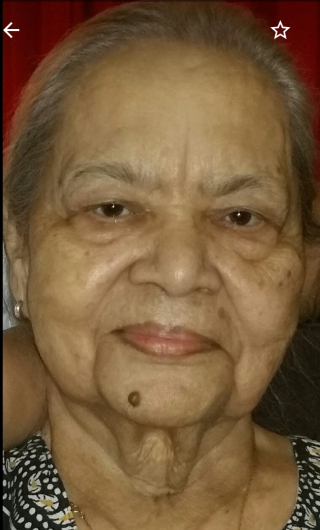
Posted on this day, the 31st August 2025 – the 10th mahasamadhi [passing of the body] commemoration of Sri Jayanti Devi Mataji – our ashram 'Mummy' – pictured.
On 13th October 1928 a girl baby was born into the prosperous and well-known Naidoo, Tamil-Indian family, in Durban. She was named Thanalutchmee.
Even under Apartheid, this family was resourceful and ran a very successful Indian cuisine restaurant in the Grey Steet area of Durban, called the Goodwill Lounge. Here’s a brief excerpt [for which many thanks to the author] from an article reminiscing about ‘those days.’
‘The larger-than-life and immaculate Pompie Naidoo’s Goodwill Lounge was well known throughout the country. Attracting world-renowned and local jazz musicians, political fugitives, South African Soccer League teams from around the country and the elite of the Durban social scene. It was the place to be seen on a Saturday evening in the ‘50s and ‘60s. As a boy, I have fond memories of frequenting the Goodwill Lounge with my parents and family for lunches, dinners or just to relax and have a cuppa. Being lifted up and carried by ‘Uncle Pompie’ and then told to go to the front and take any sweet of my fancy was indeed the highlight of my visits.’ Ends.
Thanalutchmee’s family was very politically aware and indeed active in Apartheid-era social justice issues. She attended Catholic schools and used to speak of the nuns of those days who taught her and her schoolfriends. Some of those friends went on to become prominent local political figures. This incredibly accomplished young woman married Jackie Pillay [word is that she was encouraged to do so, to keep her away from political activity], who was a well-known figure in the local boxing community. Together they would go on to have five children, three of whom are still alive today.
‘Dolly’ as she was known to her family and friends, along with Jackie, became close disciples of Swami Nischalananda Puri, founder of the Ramakrishna Centre of South Africa in 1942.
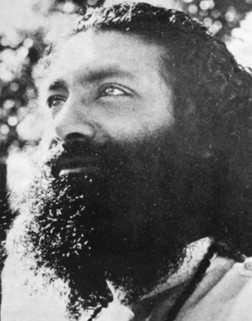
When Swami Nischalananda left the body in 1965, a tiny core of dedicated, non-monastic individuals and households kept the Ramakrishna Centre running. It was by then located in the former Chateau Montreal building, at number 8, Montreal Road, Avoca, in Durban. All of this was in the middle of the not entirely unexpected ‘political’ upheaval, which all too often follows the death of a leader in a religious community. Human nature remains sadly, quite predictable.
Thanalutchmee was named [typically on spiritual initiation – what we call an ‘ashram name’] by Swami Nischalananda. She became known as Jayanti Devi Mataji – but everyone at the ashram always called her ‘Mummy’. And Mummy she was, to all and sundry.
She was an exceptionally creative all-rounder. In this writer’s long life I have never come across an individual so gifted, in so many ways. She wrote scripts, crafted costumes for, produced, staged and directed Indian religious epic plays. They toured nationally in South Africa to raise funds for the construction of the future magnificent complex which is the Ramakrishna centre ashram of today. The Ascetic by Rabindranath Tagore, with our very own Swami Chandikananda in the lead role, Mirabai, and Sri Krishna the Great Deliverer were some of them.
She was trained in the Carnatic style of Indian music, sang and played musical instruments exquisitely, cooked like a dream, and produced other gorgeous handcrafts. She was a creative tour de force when it came to ideas for fund raising and organising events for it.
Mummy was the epitome of calm and serenity. I never, in forty-four blessed years of knowing her, ever saw her flustered, impatient or angry.
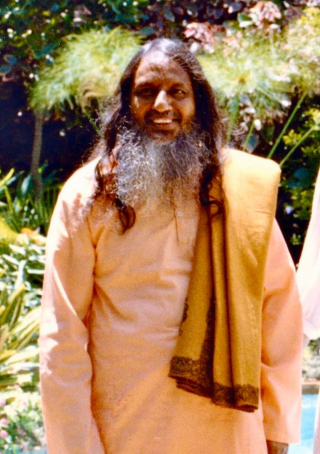
Swami Shivapadananda [the subject of all these more than 1200 blog posts] became the second president and spiritual head of the Ramakrishna Centre of South Africa in 1965, following the mahasamadhi of Gurudev [as we lovingly refer to him]. Mummy was a significant part of the bedrock of support that saw Swamiji [Shivapadanandaji] grow the centre to stellar heights. If I were to use one word to describe her, it would be ‘indefatigable’. The dictionary definition of that is: ‘tireless persistence’.
There was a fountain of energy in Mummy that we only saw waning when that beloved body got into its 70s, and it was beset with a range of debilitating health conditions. It was worn out by decades of self-sacrifice and service to God and God-in-others, in keeping with Swami Vivekananda’s dictum of ‘Service to man is worship of God.’ I’ve always thought that the parable in the New Testament of the Christian Bible must have had Mummy in mind, when it records the Master saying to his servant, ‘Well done, thou good and faithful servant.’ [Matthew 25:21].
I haven’t yet encountered a finer example of living a spiritual life in such a way that you’re a constant inspiration to others. But that was the norm with Mummy. The other norm was the invisibility of her greatness. Many of those closest to her, had no idea who she really was. Holy Mother Sarada Devi said, ‘There is darkness under the lamp.’
When she was a young girl, Mummy had a 'dream'. In that dream, a bare-chested sadhu with long matted hair and beard, Rudraksha beads around his upper arms and neck, came and stood at the side of her bed. He had tears streaming down his face. He looked at her for an extended time with great compassion, and then disappeared.
Many years later, when Mummy was pressing Swamiji’s feet, she looked up and realised that this was the sadhu who’d visited in the subtle body all those years before. In that exact instant, Swamiji said, ‘Yessir’, which is something he’d often say when he knew an important or insightful moment had registered in our minds.
Swamiji was a Yogi of the old order. He’s been described even by monks of the Ramakrishna Mission as 'a mystic'. He told me that 'In this birth, I have come for the householders.’ But he indicated that he visits different planes of consciousness from time to time, to guide specific souls. I would never have shared this when he was still in the body. If you can receive it, please do. If not, ignore it.
Likewise, I have long said, and will repeat now, that Mummy was the female spiritual component during Swamiji's time here. And she fulfilled that role for Swami Nischalananda, too. Lest we get stuck in the idea of just the ten incarnations of Lord Vishnu, Sri Krishna said in the Bhagavatam, ‘My incarnations are innumerable.’
But back to the point: in the Hindu tradition, whenever a spiritual power comes to uplift a segment, or sometimes large swaths of humanity, there’s always the male component and the female component. With all incarnations, of whatever type.
Once, when I said in a talk that Mummy was without doubt Swamiji’s shakti in the sense of the female divine force, some vile individual tried to distort that into me suggesting that Mummy was Swamiji’s wife. For such polluted minds, one can only have pity.
I personally witnessed incident after incident in which it was clear that the microcosm 'purusha-prakriti' combination of Swamiji and Mummy was here for a very special purpose. Some people, although very close to Mummy in the physical sense, had no idea of her spiritual greatness. Some of the younger generation, like Brother Vasan Govender, Brother Bhupendra and other teenagers who served Swamiji’s body for a few years before his mahasamadhi, will attest to Swamiji cautioning them against in any way offending or upsetting Mummy. Sri Ramakrishna said the same thing about people who risked offending Holy Mother Sarada Devi. Please note: this isn’t 'a comparison' – it’s indicating the reverence with which the Mother-aspect of the divine is revered and should be treated.
On 31st August 2015, at approximately 3pm, Mummy gave up her body. I was blessed to be with her, in the room with Swami Premananda, our monastic gurubhai [fellow disciple of the same guru] and four of Mummy’s then surviving children.
Mummy’s bodily health had been declining over several years. She one day said to me when the body was aged about 84, ‘I am so tired of dragging this body around with me.’

As we passed the halfway mark of the calendar year in 2015, Mummy was less able to move about and had to spend much time lying down due to spinal compression fractures producing excruciating nerve pain, when standing or moving.
Mummy began to ask me from time to time, about auspicious calendar days. I knew that this was with her departure day in mind. In the week before she let the worn-out blessed body go, she was almost perpetually in a state of samadhi. How do I know it was samadhi? I’ll write about that separately at some other time.
With Mummy’s focus on auspicious days, I spoke to a doctor friend who was located around the corner from Mummy’s little cottage and said, ‘When the time comes for Mummy to pass on, will you be there for us, and can we call on you, regardless of the time?’ He looked at me as if I had lost my mind and said, ‘She may be very old, but there’s nothing seriously enough wrong with her, that indicates she’s going to die anytime soon.’ He was a kind but secular, non-practising Hindu physician, and it would have been impossible to explain to him, that as an accomplished Yogini and mahatma, Mummy was giving all the signs of packing her spiritual bags and getting ready, to consciously leave and go join Swamiji. Free of the encumbrances of the burnt-out body.
When we did walk around the corner to his surgery one afternoon to ask him to come certify that Mummy had indeed left the body, his face was a study.
On the 12th of August 2015, I heard Mummy doing some deep, resonant breathing. I thought at that time, ‘This is very unusual and must be a gathering of pranas before letting the body go.’ The next day all was very quiet. Too quiet. We were in Mummy’s room in the early afternoon, and Swami Premanandaji was leading us in chanting the Maha Mritunjaya mantra, the 'Om tryambakam…' This is the mantra typically chanted when someone’s body is ‘going to be severed from the vine’ as the verse describes it. Mummy's eyelids had moved from three quarters closed, which they would usually be when she was deeply indrawn, to finally closed. With barely discernible breathing.
We continued chanting the mantra and at about four in the afternoon, we quietly left Mummy’s room to go downstairs again. I gently squeezed the holy feet as I left. Shortly after that, our medical Sister, Saras Bhanjan, came to visit. On seeing Mummy’s body, and noticing cyanosed lips, she said, ‘Mummy’s left the body.’ She went down to her car to get her stethoscope and back upstairs again to check and confirm that it was indeed so.
That’s when we went around to call the doctor to come and certify the bodily death. Like everything else that Mummy did, she’d quietly slipped away at the time and day of her choosing, in such a way that it didn’t inconvenience anyone.
And with that, another chapter in the history of the Ramakrishna Centre of South Africa ended. Apart from our darling Papa [Swami Shivapadananda] as I called him, I have never met another such extraordinary human being, nay, saint in disguise, like Mummy. We were all blessed to know her and experience her loving words, hugs and advice. Jai Sri Jayanti Devi Mataji, Jai!
Click here for the Flipbook version of: → Swamiji's biography
It's a free-to-read, draft 396 page, extended version of 'A Life Lived For Others.
However, if you'd prefer a straight-up PDF version, please click HERE. (Depending on the age of your device or the browser you use, you may need to download a a PDF reader.)
Dear Devotee, if we use the term 'He or he', when referring to Swamiji, it's not impolite or disrespectful. It's to minimise the repetitiveness of saying or writing 'Swamiji' too many times.
The original audio recordings of these posts were made by close Ramakrishna Centre of South Africa and Swami Shivapadananda devotee, Mother Radha. The audio editing and noise reduction of the original 1970s-onwards tapes, has been lovingly engineered, over many years, by her son and our dear gurubhai, Brother Tim. May Sri Ramakrishna and Swamiji bless them both.
Admin tip: Underlined words are links. If you click on them, they'll take you to an explanation of the particular word or term. [In these overviews, Admin comments are typically in a smaller green font, and square bracketed, like this statement.]
Dear reader, if you spot typos or other errors, please feel free to email the site admin on info@imbizo.com with your suggested correction/s.
Context: As always, care should be taken to remember that what Swamiji was saying, was often very specific to the needs of people with him at the time. Please bear this in mind.
Links to our Guru Parampara (spiritual lineage) organisations, which will broaden your knowledge base: Ramakrishna Math and Mission and our alma maters, the Ramakrishna Centre of South Africa and the Sri Sarada Devi Ashram in Durban. The Ramakrishna Centre of Johannesburg is also active in Gauteng province in South Africa.
There are various publications [The Gospel of Sri Ramakrishna etc.] which you can download at no charge, from the Ramakrishna Centre of SA website page, HERE.